

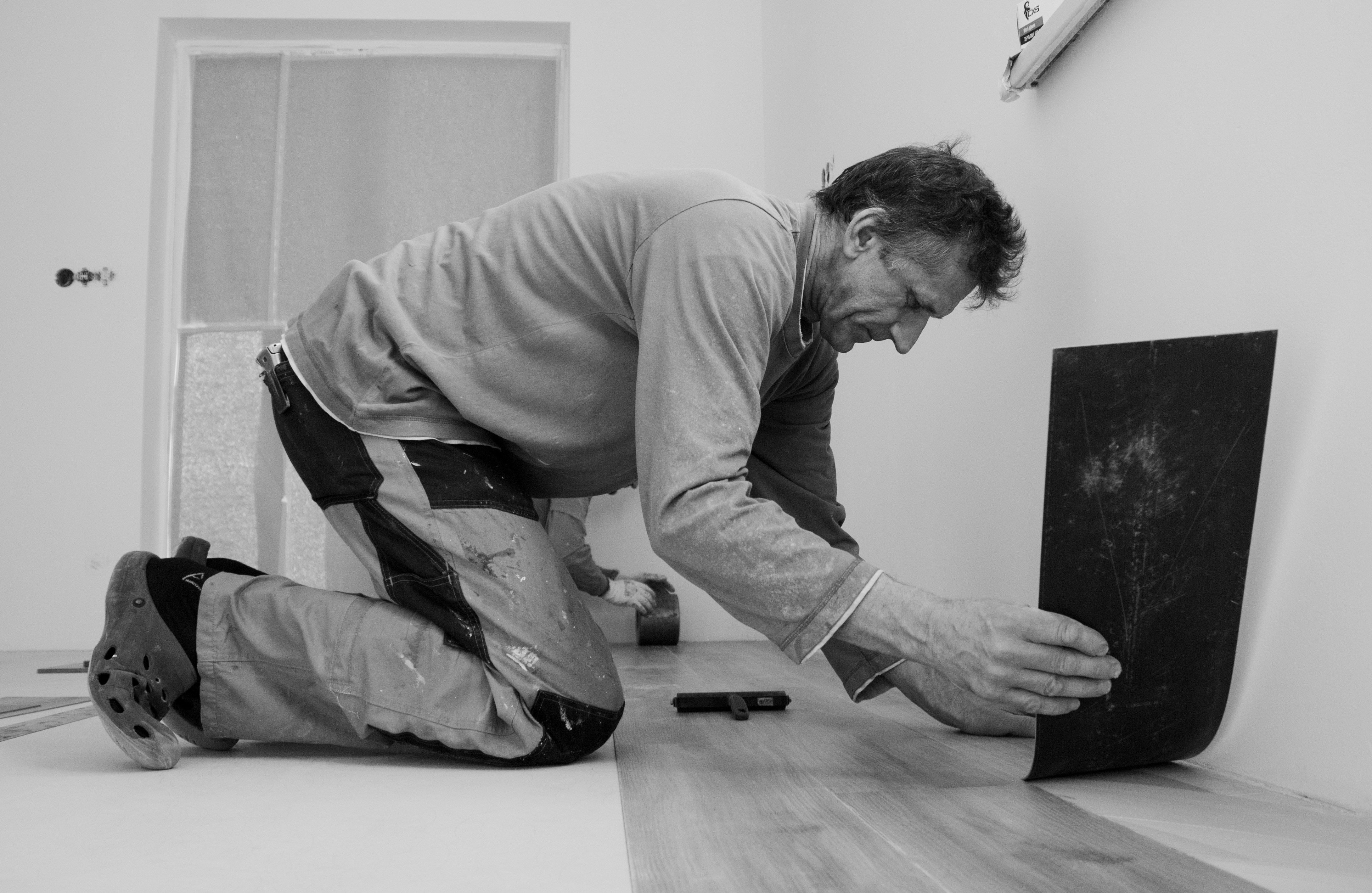
Locking vs. Glue-Down Luxury Vinyl Plank: What’s the Difference?
Luxury vinyl plank (LVP) has become a popular flooring choice for homes and commercial spaces thanks to its durability, realistic wood looks, easy maintenance, and wide range of styles. But once you decide on luxury vinyl plank, there’s another important choice to make: locking or glue-down?
Both options can provide a beautiful, durable floor, but they’re installed differently and perform differently in certain applications. Understanding those differences can help you choose the right product for your space.
What Is Locking Luxury Vinyl Plank?
Locking luxury vinyl plank—often called click-lock, floating LVP, or rigid-core flooring—uses an interlocking system along the edges of each plank. The planks connect to one another rather than being permanently attached to the subfloor.
Because the flooring “floats” over the subfloor, installation can often be completed without adhesive. Depending on the product and existing floor conditions, some locking LVP can also be installed over certain existing hard-surface floors.
Advantages of Locking LVP
Faster installation: With no adhesive to spread across the entire floor, locking planks can often be installed more quickly.
Less disruption: Floating installations can be a great option for remodeling projects where minimizing downtime and mess is important.
Rigid construction: Many locking LVP products feature a rigid core that helps create a solid feel underfoot and can handle minor variations in the subfloor better than some flexible products.
Easier removal: Because the planks aren't fully adhered to the subfloor, removing or replacing the flooring in the future may be easier.
Things to Consider
A floating floor needs room to expand and contract, so proper expansion space around the perimeter is important. Large or unusually shaped areas may also require special installation considerations.
And while rigid-core products can help with minor subfloor variations, that doesn't mean subfloor preparation can be skipped. A clean, flat, stable surface is still critical to a successful installation.
What Is Glue-Down Luxury Vinyl Plank?
Glue-down LVP is installed by adhering the individual planks directly to the prepared subfloor with an approved flooring adhesive.
Rather than floating above the substrate, the flooring becomes part of the floor assembly. This can create a firm, stable feel and makes glue-down LVP especially attractive for certain commercial and high-traffic applications.
Advantages of Glue-Down LVP
Excellent stability: Because the flooring is bonded directly to the substrate, there is very little movement once it is properly installed.
Great for high-traffic spaces: Glue-down LVP is commonly used in commercial environments and other areas where flooring must stand up to frequent foot traffic and rolling loads.
Low-profile installation: Glue-down products are often thinner than rigid-core locking products, which can be useful when transitioning between different flooring materials or working with existing doors and fixtures.
Individual plank replacement: If a plank becomes damaged, it can often be removed and replaced without taking apart a large section of the floor.
Things to Consider
Subfloor preparation is especially important with glue-down flooring. Because the planks conform more closely to the substrate, imperfections underneath can potentially become visible through the finished floor.
Installation also requires the correct adhesive and proper application. Temperature, moisture, substrate condition, adhesive working times, and manufacturer requirements all need to be considered.
Locking vs. Glue-Down LVP at a Glance
Feature | Locking LVP | Glue-Down LVP |
|---|---|---|
Installation | Planks lock together and float | Planks adhere directly to subfloor |
Adhesive | Typically not required | Required |
Installation speed | Often faster | Typically more involved |
Subfloor preparation | Important | Especially critical |
Floor movement | Designed as a floating system | Minimal when properly bonded |
Overall thickness | Often thicker | Often thinner |
Plank replacement | May require disassembling surrounding flooring | Individual planks can often be replaced |
Common applications | Residential and light commercial | Residential, commercial, and high-traffic areas |
Which Type of Luxury Vinyl Plank Is Better?
There isn't one answer for every project. The better flooring system depends on the space, substrate, traffic, installation conditions, and long-term expectations.
Locking LVP can be an excellent choice for residential remodeling projects, especially when installation speed and convenience are priorities. Glue-down LVP may be the better solution when stability, heavy traffic, rolling loads, or a lower-profile floor covering are important.
The condition of the existing floor or subfloor can also play a major role in the decision. Moisture conditions, flatness, transitions, room size, and the manufacturer's installation requirements should all be evaluated before choosing a system.
Don't Forget What's Under the Flooring
Whether you're installing locking or glue-down luxury vinyl plank, the finished floor is only as good as the surface beneath it.
Proper substrate preparation helps prevent problems such as uneven flooring, visible imperfections, movement, adhesive failures, and premature wear. Depending on the project, preparation may include cleaning, patching, leveling, moisture testing, removing contaminants, or addressing an unsuitable existing surface.
Taking the time to properly prepare the substrate—and selecting the LVP installation method that fits the application—can make a significant difference in how the floor looks and performs for years to come.


